

How to Plan a Low-Maintenance Home Landscape
A home garden should fit the time you have for it. A practical low-maintenance landscape can still look green and welcoming, but it needs a layout, surface and plant choices suited to the site. For Dhaka homes, that means considering sun, shade, rainwater, drainage, access and how the family uses the space before choosing plants or finishes.
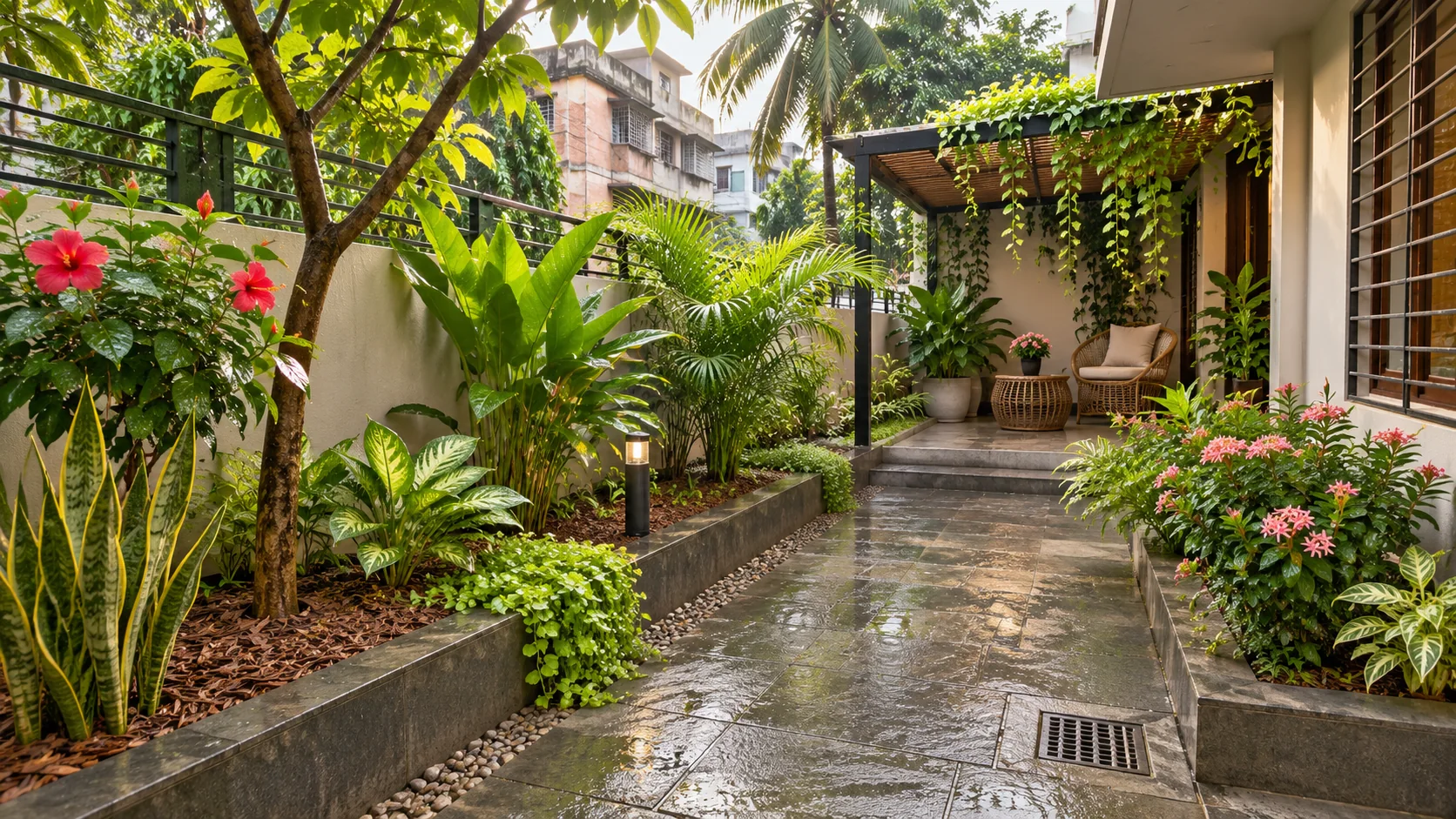
Low maintenance does not mean no maintenance. The goal is to reduce avoidable work such as constant watering, frequent lawn edging, difficult pruning and replacing plants that were poorly matched to their location. This guide explains how to plan low-maintenance home landscaping around your plot and routine. The featured image is an illustrative concept, not a completed Baganbari project.
Start with the way your household uses the garden
List the activities the outdoor space needs to support: sitting, children playing, growing herbs, welcoming visitors, keeping a clear entrance or simply enjoying greenery from indoors. Then identify who will maintain the garden and how much time is realistic in a normal week. These answers help decide how much lawn, paving, planting and seating the layout should include.
Walk the garden at different times of day and note sunny and shaded areas, roof runoff, existing drains, taps, access routes and any recurring wet spots. A simple sketch is enough to start. A planting plan works best when it responds to the actual light, soil and drainage conditions rather than trying to cover every area with the same plants.
Make the layout simple to reach and care for
Keep the main route between the entrance, seating and planting beds clear and comfortable. Leave enough access to reach plants for watering, pruning and cleaning. Simple bed shapes are generally easier to edge and maintain than many small, narrow planting strips. Keep drain covers, taps and service points visible and reachable.
Use a few clear planting areas instead of scattering individual pots or small beds throughout the plot. Grouping plants into defined beds can make watering, mulching and seasonal cleanup easier. The right path and bed layout still depends on the property's size, levels and drainage; do not cover an inspection point or direct runoff toward a building, neighbour or public path.
Choose plants for the conditions in each part of the plot
Before buying plants, check how much direct sun the location receives, whether the soil drains freely, and how much room each plant needs when mature. Group plants with similar light and watering needs so one area does not require several conflicting care routines. A plant that suits an exposed sunny bed may not suit a shaded corner or a place that stays wet after rain.
Use a simple palette and repeat a small number of plants where the conditions allow. A mix of evergreen structure and seasonal colour can keep the garden interesting without requiring frequent replanting. Ask a local horticulture professional or nursery to confirm that a plant is suitable for your specific Dhaka site, and check its mature size, roots and pruning needs before planting.
Landscape planning guidance also recommends observing site conditions before selecting plants. The University of Georgia Cooperative Extension site-analysis guide provides general planning principles; its regional plant recommendations should not be treated as a Dhaka plant list.
Use lawn and hard surfaces where they serve a purpose
A lawn may be useful for play or open space, but a small or awkwardly shaped lawn can need regular mowing and edging without adding much value to how the garden is used. Keep grass where the household will use it, and consider other suitable surfaces or planting for the remaining areas. Any alternative should fit the property's drainage and access requirements.
Paths, paving and seating can reduce the area that needs routine trimming, but more hard surface is not automatically better. Choose a finish that is safe when wet, easy to clean and suitable for the site's water flow. Permeable materials only work as intended when their base and outlet conditions are appropriate. Keep channels and drains accessible for inspection.
Reduce repeat watering with a sensible care plan
Group planting by watering needs and place water-demanding beds where they can be reached easily. Mulch can help protect exposed soil and reduce routine weeding, but the type and depth should suit the plants and site. Keep mulch away from stems and building walls, and do not use it to hide a drainage issue.
A drip line or irrigation timer may save time on a suitable garden, though the system still needs occasional checks for leaks, blocked emitters and changing plant needs. Avoid setting a fixed schedule and leaving it untouched through changing weather. Watering should respond to the soil, plants and recent rain at the property.
Plan for mature plant size and seasonal upkeep
Small nursery plants grow. Allowing for mature height and spread helps avoid repeated hard pruning, crowded paths and plants pressing against windows or walls. Choose plants that fit the available space, and ask how often they need trimming, feeding or replacement before including them in the plan.
Write a simple care calendar for tasks such as checking drains, removing dead growth, trimming where needed, refreshing mulch and reviewing irrigation. Schedule checks around the site's seasonal conditions rather than relying on an identical monthly routine all year. A low-maintenance garden still benefits from short, regular inspections that catch small issues early.
Low-maintenance home landscaping checklist
- List how the household will use the outdoor space and how much care time is available.
- Map sunlight, shade, taps, drains, downpipes, access routes and wet areas.
- Keep paths, planting beds and service access simple and easy to reach.
- Choose plants for the actual light, soil, drainage and mature growing space.
- Group plants with similar watering needs and use lawn only where it is useful.
- Check surface and irrigation choices against the property's drainage conditions.
- Agree on a realistic seasonal care routine before installation is complete.
What affects the cost of a low-maintenance garden?
Cost depends on the plot size, site preparation, access, drainage, paths and paving, plant sizes, soil work, irrigation and the amount of existing garden that can be retained. A lower-maintenance layout may require more planning or durable materials at the start, while the long-term result depends on choosing elements suited to the site. Request a site-based scope that separates design, materials, installation and ongoing care.
Plan a residential landscape for your home
Baganbari's Residential Landscape service can help you discuss the plot, garden use, drainage and maintenance priorities before deciding on a project scope. For compact outdoor spaces, see our guide to courtyard garden planning for narrow urban plots. If water repeatedly collects after rain, our guide to garden drainage problems in Dhaka homes explains what to observe before changing the site.