

Garden Drainage Problems in Dhaka Homes
Water that remains in a home garden after rain can damage plants, make paths slippery and keep soil saturated near walls. In Dhaka, a drainage problem may come from a blocked outlet, a low spot, compacted soil, a roof downpipe or a combination of site conditions. Finding the source before changing the garden helps avoid a repair that simply moves the water somewhere else.
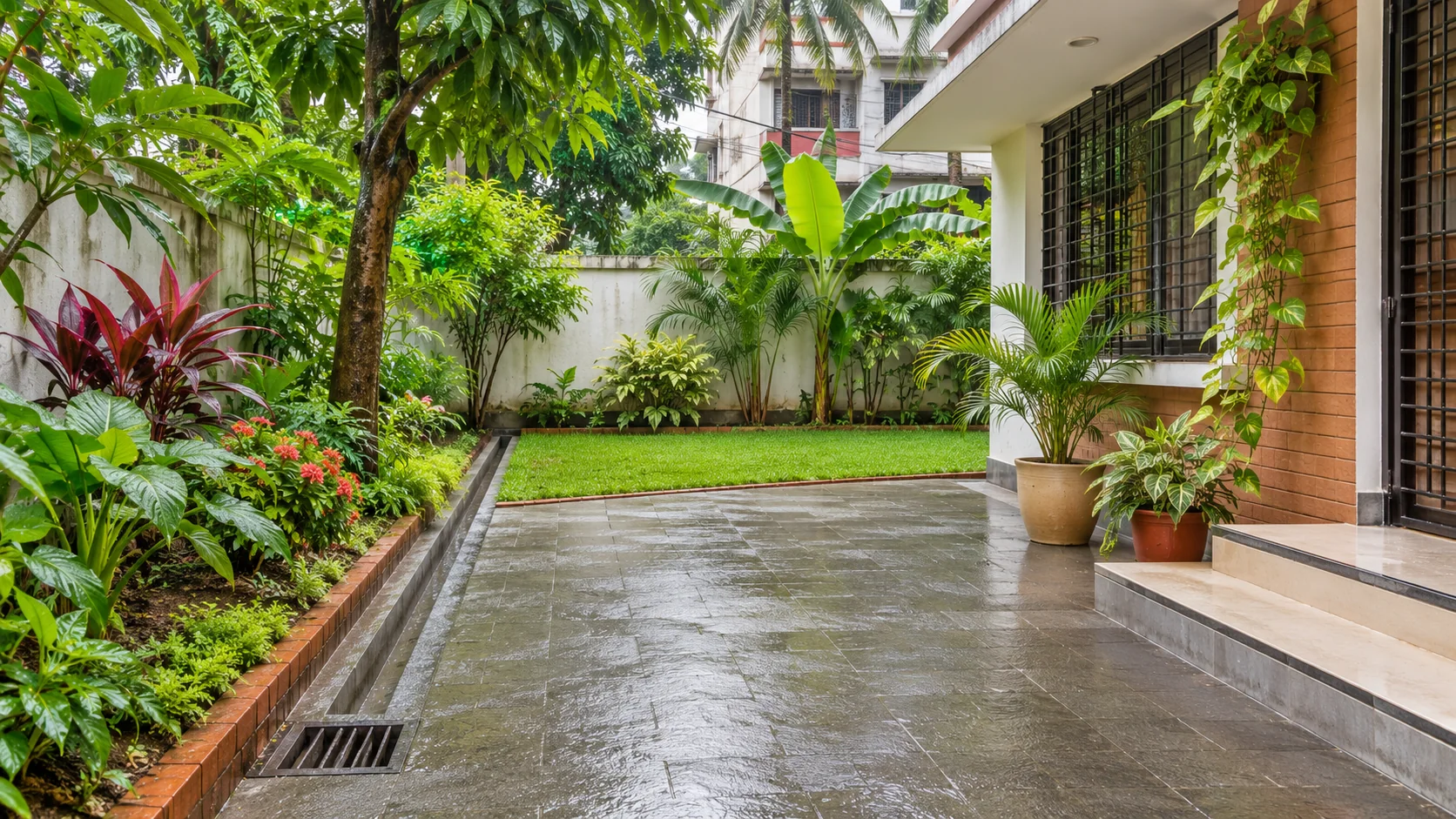
This guide explains how to investigate common garden drainage problems in Dhaka homes and what to discuss before changing levels, paving or planting. The right solution depends on the property and its approved drainage route. The featured image is an illustrative concept, not a completed Baganbari project.
Signs your home garden may have a drainage problem
Look for water that repeatedly collects in the same place, soil that stays saturated long after nearby areas have dried, washed-out mulch, exposed roots, a musty smell or algae on shaded paving. Plants may struggle when their roots remain waterlogged, although yellow or wilted leaves can have several other causes too.
Also check whether water reaches a doorway, sits beside a boundary wall, flows across a frequently used path or appears near a building foundation. These signs do not identify the cause by themselves, but they help show where a closer site assessment is needed.
Why water can collect in Dhaka home gardens
Blocked or poorly connected outlets
Leaves, sediment, plastic and other debris can cover a garden grate or channel. A downpipe may also discharge onto a small paved area without a suitable route onward. Check only the visible, accessible surface points and note where water enters and leaves the garden. Do not open or alter underground drains unless the responsible property professional has confirmed the system and safe procedure.
Low spots and changes in ground level
A small dip in a lawn or paved surface can collect runoff. Previous repairs, added soil or paving may have changed the slope and created a low point, or directed water toward a doorway or wall. A level change should be planned across the whole area so it does not create a new problem for a neighbour or shared space.
Compacted soil and too much hard surface
Heavily used ground can become compacted, while dense paving leaves less surface area for water to soak into the soil. Adding more topsoil or planting into a compacted bed may hide the symptom without correcting where the water goes. Consider the whole site, including its surfaces, outlet capacity and existing drainage connections.
Roof runoff and irrigation
Roof downpipes can send a large amount of water to one small part of a garden during a storm. Leaking taps, hoses or irrigation can create wet patches even when there has been little rain. Observe the area both during rainfall and on a dry day to distinguish storm runoff from a continuing leak.
How to trace the source of standing water
- Make a simple site sketch. Mark the house, boundaries, paths, low areas, visible drains, downpipes, taps and places where water collects.
- Observe during and after rain. Take dated photos from the same positions. Note where water first appears, the direction it flows and how long the wet areas remain.
- Check accessible surface points. Look for visible debris on grates and channels. Keep a record of any downpipe that discharges directly onto paving or a planting bed.
- Compare wet and dry conditions. If an area becomes wet without rain, check for a possible irrigation or plumbing leak and contact the appropriate professional.
- Keep the outlet in view. Identify where the garden channel or drain is intended to discharge. If the route is unknown, do not assume a new connection or soakaway is safe.
For broader weather context, the Bangladesh Meteorological Department publishes normal monthly rainfall information. Conditions vary, so observe the actual property during local rain rather than using a general figure as a design specification: Bangladesh Meteorological Department rainfall normals.
Practical first steps for a garden drainage issue
Clear loose leaves and debris from accessible surface grates, and keep drain covers visible so they can be checked. Pause irrigation in the affected area long enough to see whether the wet patch improves. Record the issue before moving soil or plants; that history can help a landscape or drainage professional identify the cause.
Do not direct runoff onto a neighbour's property or a public walkway. Avoid raising soil against the house, covering a drain, sealing over an inspection point or digging a French drain or soakaway without confirming the soil, underground services and a safe, permitted outlet. A change that removes water from one spot can create dampness or flooding elsewhere.
When planting or permeable paving can help
Plants suited to the site's light and soil can make a garden more resilient, and permeable surfaces can be useful where the base, soil and discharge conditions are appropriate. Neither is a universal fix for standing water. A planting bed cannot safely take unlimited runoff, and a permeable surface may still fail if its base is compacted or the water has nowhere suitable to go.
Choose plants after the drainage pattern is understood. Persistent waterlogging, erosion or water collecting beside a building calls for a site-specific assessment before making landscape changes.
When to seek a professional drainage assessment
Ask a qualified landscape or drainage professional to assess the site if water repeatedly remains after rain, reaches entrances, affects a wall or foundation, damages paving, or seems connected to an unknown underground outlet. Building movement, cracks, sewage odours, a suspected pipe leak or water entering the home should be referred promptly to the appropriate building, plumbing or utility professional.
A useful assessment should document the affected areas, likely flow paths, existing outlets, level changes and any limits on discharge. Ask what work is included, which specialist is responsible for drainage or structural details, and how the proposed change will avoid shifting the problem to another property or public area.
Home garden drainage Dhaka checklist
- Photograph the garden during rain and after it stops.
- Mark low spots, wet areas, downpipes, taps and visible drains on a site sketch.
- Clear only loose debris from accessible surface grates and keep covers visible.
- Check whether irrigation or a leak could be keeping the area wet.
- Confirm the intended outlet before considering a new channel, soakaway or drain.
- Keep runoff away from buildings, neighbours and public walkways.
- Get a qualified site assessment for recurring water, structural concerns or unknown underground drainage.
Plan a better-drained home garden
Drainage, paths and planting should be considered together when planning a residential landscape. Baganbari's Residential Landscape service can help homeowners discuss site conditions, garden use and the right scope for a landscape project. You may also find our guide to courtyard garden planning for narrow urban plots useful when reviewing a compact outdoor space.