

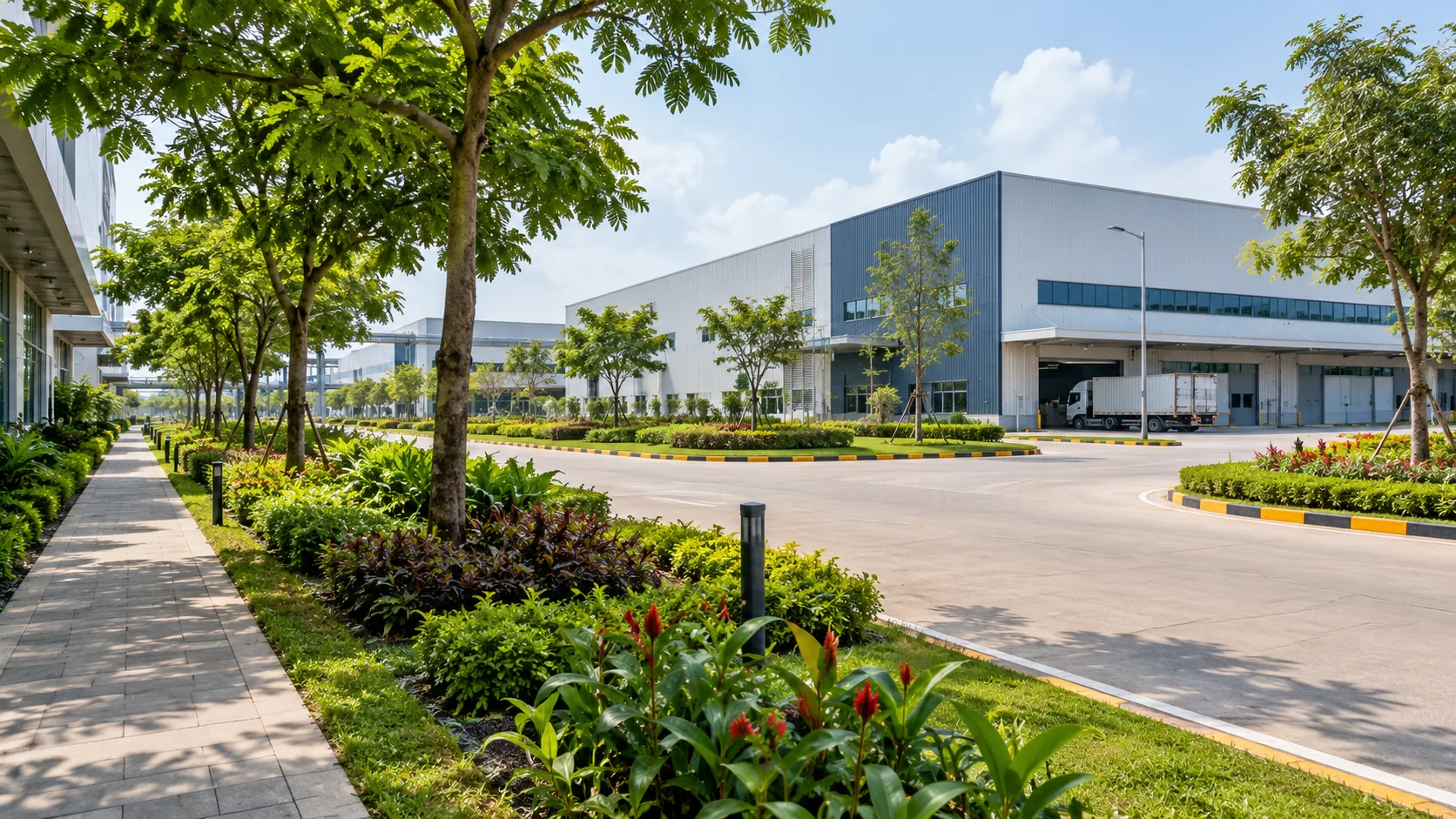
Industrial Landscaping: Why Factories Need Green Spaces
Industrial landscaping in Bangladesh should support the way a factory or industrial property works every day. A thoughtful plan can make the entrance feel cared for, help people find their way around, and introduce green spaces without interfering with deliveries, security or site operations.
Factories have different needs from homes or office gardens. Vehicle movement, loading areas, utilities, drainage, worker routes and maintenance access all need to be understood before planting begins. The best starting point is a site review with the facility team—not a plant list chosen in isolation.
Why do factories need green spaces?
Green areas can give an industrial property a more organized and welcoming appearance for staff, visitors, suppliers and clients. They can also help distinguish pedestrian areas from vehicle and service zones when the overall site layout is planned clearly. A shaded outdoor rest area may be useful where the site and workplace arrangements allow one.
Landscaping is not a substitute for workplace safety, environmental controls or building maintenance. Its role is to complement those systems and fit the facility's operating requirements.
Plan landscaping around factory operations
Before preparing a design, map the main gate, security points, loading bays, internal roads, pedestrian routes, emergency access, utility areas and existing drainage. Ask the people who operate and maintain the site to identify access restrictions and recurring problems.
- Entrance and reception: use clear, tidy planting that frames the approach without hiding signs, gates or security sightlines.
- Pedestrian routes: keep paths legible and unobstructed, and coordinate planting with the facility's approved movement and safety plan.
- Loading and service zones: leave turning, loading, equipment and maintenance areas open as required by site operations.
- Perimeter edges: consider low-maintenance planting where it does not block inspections, lighting, cameras or access to utilities.
- Staff outdoor areas: where appropriate, create a simple, maintained space away from vehicle movement and operational hazards.
Choose plants for the actual site
Industrial properties can have very different conditions across a single campus. Check sun and shade, soil or planter depth, water availability, wind exposure, drainage and the amount of care the site can provide. Consider the plant's mature size and root behaviour so it does not interfere with paths, foundations, signs, drains or underground services.
A practical plant palette should be selected for the location and maintenance capacity, with local horticultural advice where needed. Avoid choosing plants only for their appearance or assuming that one selection will suit every factory site in Bangladesh.
Coordinate planting with drainage and environmental controls
Landscaped areas should be coordinated with the property's drainage plan. Do not redirect water, cover drains or add infiltration features without review by the responsible facility and engineering professionals. Industrial yards can include areas where runoff needs special assessment; the source of the water and the site's environmental controls matter.
The U.S. Environmental Protection Agency's general design guidance recommends evaluating site conditions and designing green infrastructure for the specific location. Its materials are useful background, but they are not Bangladesh regulations or a substitute for local engineering and environmental review. See the EPA green infrastructure design strategies and its note on industrial areas as potential stormwater hot spots.
Make maintenance part of the design
A factory landscape needs a clear upkeep plan. Decide who will water new planting, trim vegetation, remove leaves, inspect irrigation, keep drains accessible and report damaged paths or fixtures. Set the maintenance frequency to match the planting and site conditions rather than assuming the garden will remain presentable without routine care.
For continuing landscape upkeep, see Baganbari's Garden Maintenance service. For a broader commercial property perspective, read our guide to commercial landscaping for offices, resorts, factories and institutions.
A practical process for industrial landscaping in Bangladesh
- Walk the site: document access, existing planting, drainage, utilities, shade and maintenance constraints.
- Agree the priorities: identify which areas should improve first and what must remain clear for operations.
- Coordinate the design: involve the facility team and relevant engineering or environmental professionals where the scope affects their systems.
- Choose a maintainable scope: match materials, planting and irrigation to the available care and budget.
- Review after installation: check plant establishment, access, drainage and maintenance needs with the people responsible for the site.
Plan your factory landscape with Baganbari
Every industrial property has its own layout, operating schedule and maintenance needs. Baganbari can discuss your site's priorities and prepare a suitable landscaping scope for your facility. Explore our Commercial Landscape service and share your location, site type, approximate area and the areas you want to improve.