

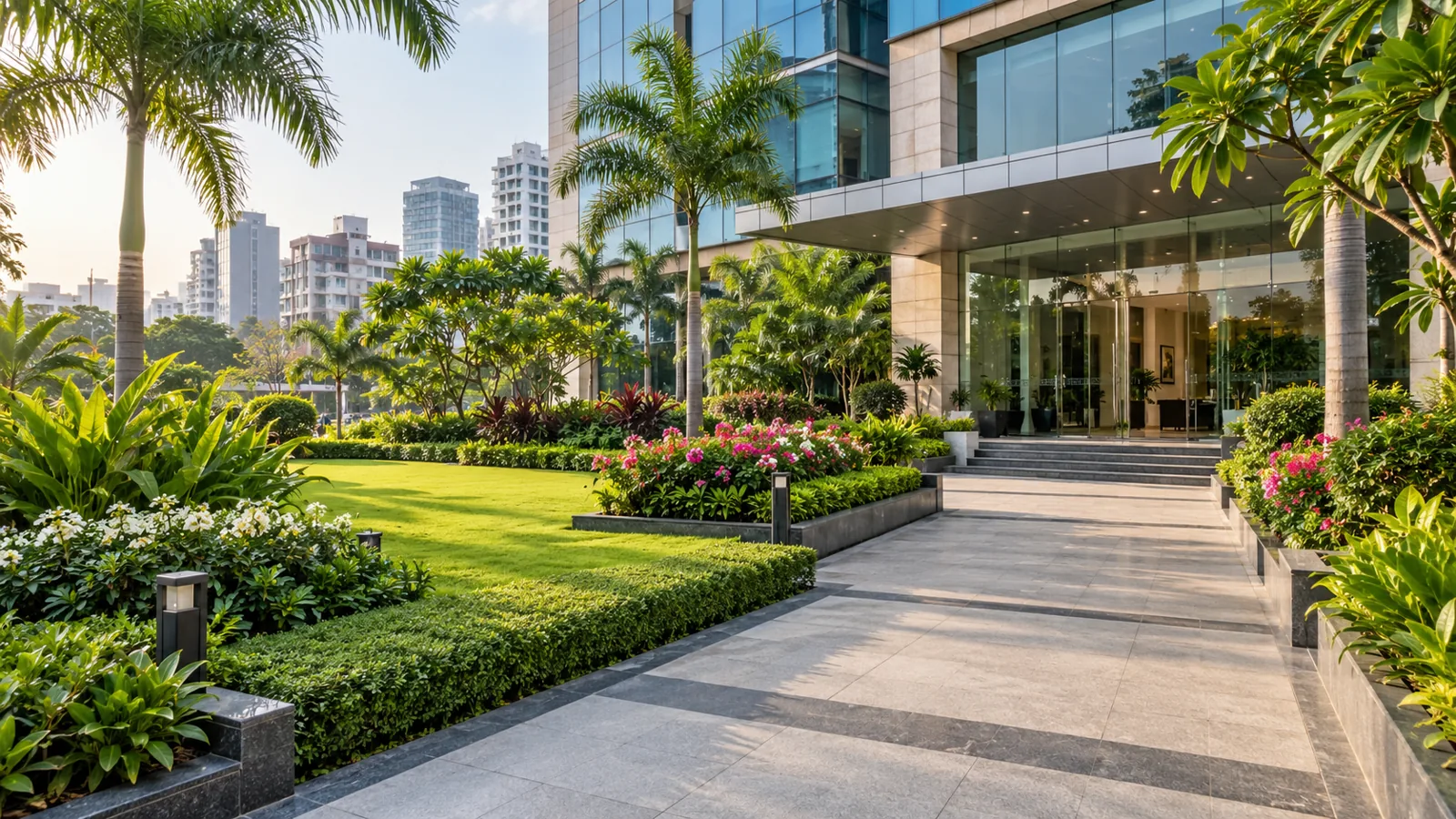
Commercial Landscaping for Offices, Resorts, Factories and Institutions
A well-planned landscape can make the entrance to an office, resort, factory or institution feel more welcoming while helping the outdoor areas work better day to day. For property owners comparing commercial landscape design in Bangladesh, the best starting point is not a plant list—it is understanding how people, vehicles, water and maintenance move through the site.
Dhaka's heat, seasonal heavy rain, humidity and dense urban surroundings all influence plant selection and upkeep. A commercial landscape should reflect the property's purpose, available space, drainage and maintenance capacity. This guide outlines practical decisions to discuss before planning a new landscape or renovating an existing one.
What commercial landscaping includes
Commercial landscaping brings together the outdoor spaces around a business or institution. Depending on the site, a project may include an arrival garden, planting beds, lawn, shaded seating, boundary planting, walkways, parking-edge greenery, irrigation and a maintenance plan. Some properties may also need a rooftop or courtyard garden, subject to the building's design and approvals.
The scope should be set after a site review. An office entrance used by visitors has different priorities from a factory yard with delivery vehicles, while a resort may need planting that supports guest circulation and views. A clear brief helps the landscape designer recommend features that fit the site instead of adding elements that are difficult to operate.
Start with the site's users and daily operations
Map entrances, accessible routes, staff areas, visitor drop-off points, service gates, loading zones, emergency access and utility equipment before placing trees or planters. Keep signs visible and walkways clear. At factories and busy commercial properties, coordinate landscape work with facility and safety teams so planting does not obstruct vehicle sightlines, lighting, cameras or routine inspections.
For resorts and institutions, observe how people use outdoor areas at different times of day. Seating, shade and planting can help define a calm waiting or gathering space, but the layout should preserve clear movement and supervision. Select durable surfaces and details suited to the expected foot traffic and cleaning routine.
Choose plants for Bangladesh's conditions
Plant selection should account for sunlight, exposure to wind, soil or planter depth, water availability and the time available for care. A Dhaka site may have hot paved edges, shaded building sides and areas exposed to monsoon rain all within the same property. Use those microclimates when grouping plants, and confirm mature size so vegetation does not crowd paths, signs, windows, drains or service equipment.
Favor a practical mix rather than relying on one decorative feature everywhere. Trees and shrubs can create shade and structure where space and underground services allow; groundcovers and seasonal color can be used where regular upkeep is realistic. Ask the designer to specify locally suitable plants and explain how replacements, pruning and watering will be handled after installation.
Plan drainage before adding more greenery
Landscape levels, planting beds and paved areas should be considered alongside the property's existing drainage. During heavy rain, water must not be directed toward building entrances, foundations, neighboring plots or routes needed for safe access. Keep drains and inspection points reachable, and coordinate any changes to fixed drainage or waterproofing systems with the responsible building professionals.
Where site conditions and local requirements allow, planted areas and other green-infrastructure features may help manage some rainwater runoff. The U.S. Environmental Protection Agency describes how green infrastructure can capture, absorb and filter stormwater; actual performance depends on the design, soil, drainage, maintenance and local conditions. For Bangladesh projects, have a qualified local professional assess the site rather than treating a general example as a design specification.
Match the design to the property type
- Offices: prioritize a legible entrance, tidy planting, shade where appropriate and outdoor spaces that do not interfere with visitor or staff circulation.
- Factories and industrial sites: protect operational clearances, loading routes, utilities, security lines and access for maintenance vehicles.
- Resorts: use planting and paths to support guest arrival, wayfinding, rest areas and views, with materials suited to frequent use and cleaning.
- Schools, hospitals and institutions: consider accessible routes, visibility, safe edges, durable planting and the needs of the people who use each outdoor area.
These are planning prompts, not a substitute for site-specific design. The final layout should be reviewed against the property's operational requirements, applicable approvals and relevant building and safety guidance.
Include maintenance in the project brief
A landscape can look finished on opening day and still become difficult to manage if maintenance was not considered. Before approving a design, agree who will water, prune, remove leaves, manage pests, inspect irrigation and replace failed plants. Set a realistic service frequency based on the selected plants, site conditions and the property's operating hours.
For a broader upkeep checklist, read our guide to monthly garden maintenance for homes and offices. If the property includes lawn areas, our Dhaka lawn-care guide covers routine considerations for grassed spaces.
A practical process for a commercial landscape project
- Define the brief: identify the property type, users, priorities, budget range, operating constraints and desired maintenance level.
- Review the site: document access, levels, existing plants, sun and shade, drainage, utilities and areas that must remain clear.
- Develop a concept: compare layout options, planting character, circulation and any irrigation or lighting requirements.
- Confirm details and approvals: review specifications, responsibilities and required professional checks before construction begins.
- Install and hand over: coordinate work with site operations, then provide the facility team with a clear care and inspection plan.
The steps and timeline vary with the size and complexity of the property. A site visit helps identify constraints early and makes a quotation more useful.
Plan a commercial landscape for long-term use
Successful commercial landscaping is a balance of appearance, movement, water management and ongoing care. When those needs are discussed together, offices, resorts, factories and institutions can make better use of their outdoor areas without losing sight of access and operations.
Explore Baganbari's Commercial Landscape service to discuss a project in Dhaka or elsewhere in Bangladesh. Share the property type, approximate site area, location and main goals to request a consultation or site visit. You can also review our landscape design ideas for modern properties for related planning inspiration.
Further reading
For general background on green infrastructure and stormwater, see the U.S. Environmental Protection Agency's overview of green-infrastructure benefits. Building and site-specific decisions in Bangladesh should follow applicable local requirements and be reviewed by qualified professionals.