

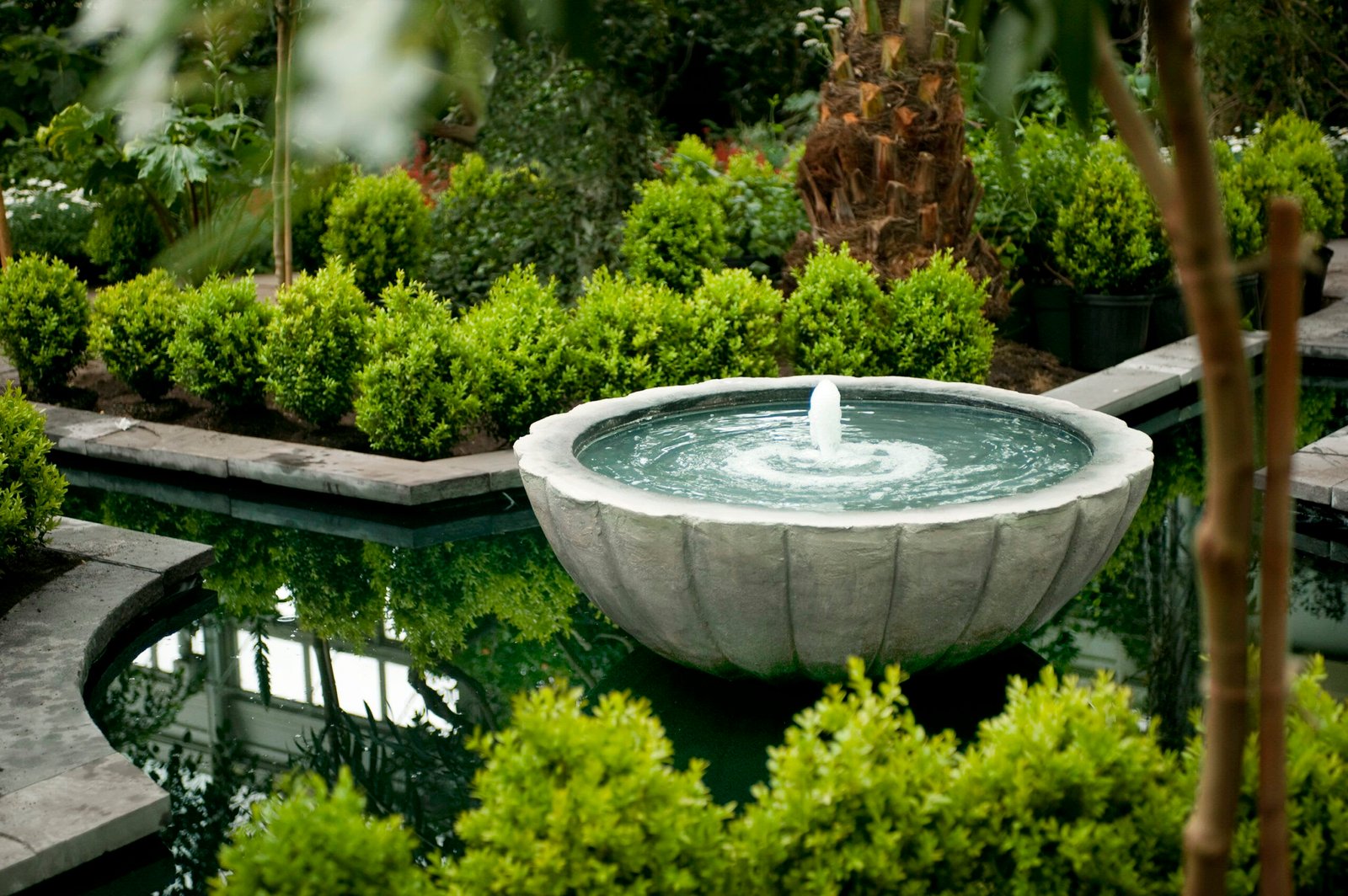
Water Fountain Design Ideas for Gardens, Rooftops and Commercial Spaces
A well-chosen water fountain design can create a focal point, add movement and make an outdoor space feel more intentional. The right option depends on the garden's scale, the way people use it, available utilities and the time set aside for maintenance.
For homes, rooftops and commercial properties in Bangladesh, begin with the site rather than selecting a fountain from a catalogue. Consider sightlines, circulation, water management and access to the pump before deciding on the style.
Water fountain design ideas for different spaces
A central fountain for a formal garden
A bowl or tiered feature can anchor a garden when it is visible from the main approach or seating area. Keep the surrounding space open enough for people to move around it, and use planting or paving to connect the fountain to the overall layout. One clear focal point is usually easier to read than several competing features.
A wall fountain for a compact courtyard
A wall-mounted or narrow-profile feature can add water movement where floor area is limited. Plan a suitable basin or collection point below it and leave access for cleaning and pump service. The wall, finish and water path should be selected together to manage splash and moisture.
A simple spillway for a contemporary landscape
A short rill or clean-edged spillway can complement modern paving, a courtyard or a linear planting bed. Decide where the water begins and ends, how the edge will be detailed and whether the sound level suits nearby seating, windows and work areas.
A naturalistic cascade among planting
Layered stone or planted edges can make a small cascade feel connected to a garden rather than like a standalone object. Choose stones and planting that fit the broader landscape palette, and ensure the basin and circulation path remain accessible for inspection.
A compact recirculating feature for a rooftop
On a rooftop, a self-contained fountain may be more practical than a large open basin, but its filled weight, support, waterproofing, overflow and pump access still need careful review. Keep roof drains clear and ask the responsible building professional to assess structural and waterproofing requirements before installation.
A welcoming feature for a commercial entrance
At an office, hotel or restaurant, place the fountain where it is visible from the approach without narrowing the accessible route or creating a splash zone across the entrance. Coordinate it with signs, lighting, seating and planting so the feature supports the arrival experience rather than obstructing it.
Match the fountain to the site and its users
Check the scale of the feature against the building and garden. A fountain that is too small can disappear in a broad space; one that is too large can dominate a courtyard or make circulation difficult. Think about the sound from nearby seating and rooms, surface materials, maintenance access and whether children or visitors may approach the water.
Penn State Extension describes a fountain or other water feature as one possible garden focal point. Its garden-design guidance is a useful reminder to make the feature part of the overall composition instead of treating it as an isolated decoration. See Principles of Garden Design.
Plan the pump, basin and water circulation
Pump selection is not based on fountain height alone. The system supplier needs the water volume, vertical lift, horizontal pipe run and any filtration requirements to recommend a suitable pump and flow. Penn State Extension explains these considerations for water features and ponds in its backyard ponds and water features guide.
Include a reachable shutoff and a way to inspect the pump and basin. Follow the manufacturer's installation and cleaning instructions, and ask how the system should be operated during heavy rain, service visits or periods when the fountain is not in use.
Account for safety, drainage and upkeep
Water features need a plan for splash, overflow and nearby electrical equipment. Use a qualified professional for electrical work, and have rooftop structural capacity, waterproofing and drainage reviewed before installing a loaded basin or fountain. For a commercial site, keep walking routes clear and consider how the feature will be supervised and maintained.
Even a recirculating fountain needs care. Check the water level and visible flow, remove leaves and debris, and inspect the basin, intake and pump according to the manufacturer's guidance. The appropriate maintenance routine depends on the fountain, water source, weather and surrounding planting; do not assume one schedule fits every installation.
Bring the water feature into the landscape plan
Plan the fountain alongside planting, paving, seating, lighting and access routes. This helps the water feature feel integrated and gives installers a chance to coordinate water supply, power, drainage and service access before construction begins. For coordinated after-dark views, read our garden lighting design ideas.
Baganbari can discuss custom water features for homes and commercial properties. Explore our Water Fountain service and the plan's related Landscape Design service, or contact our team to discuss your site.