

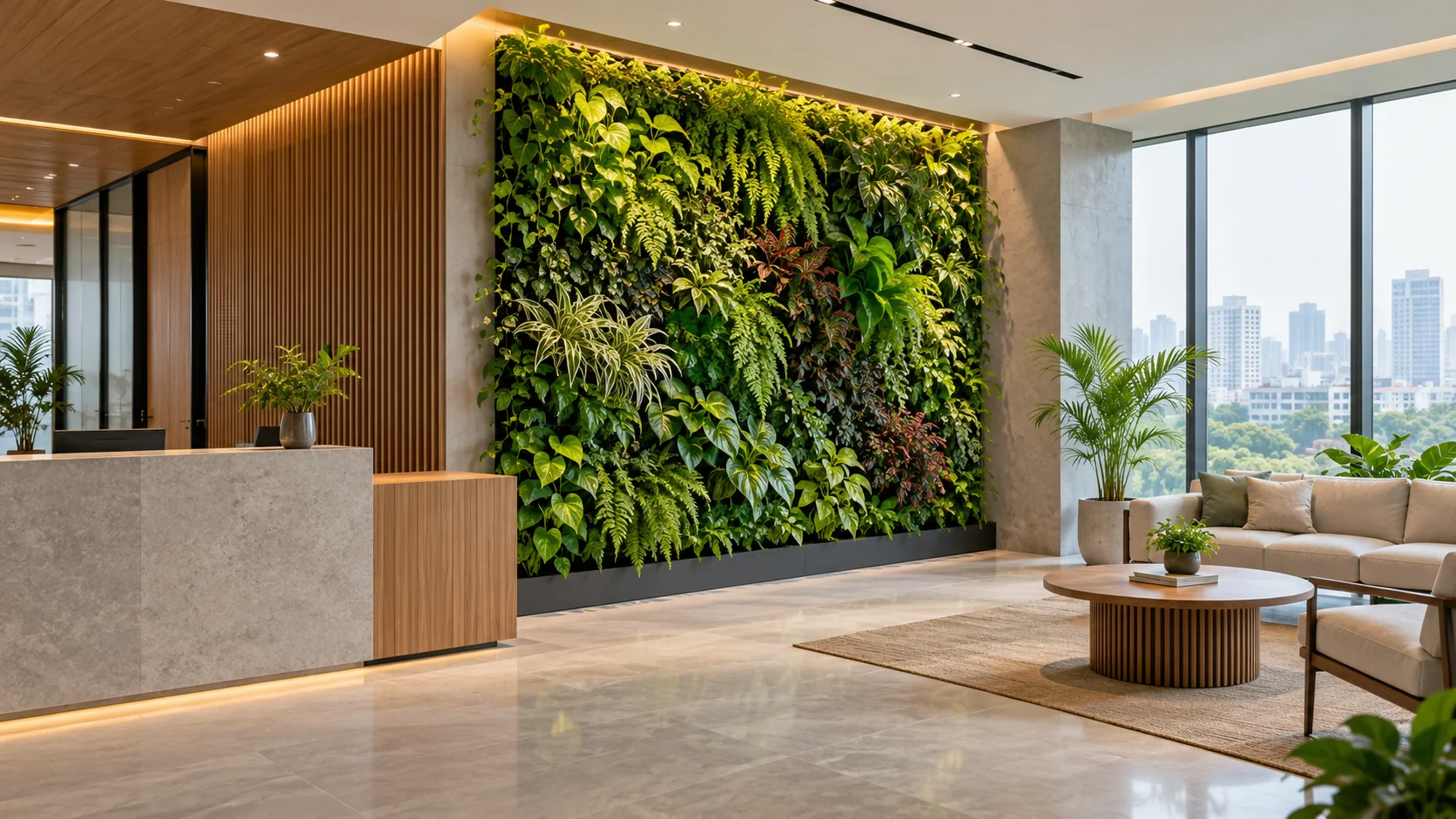
Indoor Green Wall Design: Benefits and Maintenance
Indoor green wall design can turn a suitable blank wall into a living feature for a home, office reception or commercial interior. The result depends on more than the planting pattern: the room's light, wall construction, water management and maintenance access all need to work together.
A green wall can provide a strong visual focal point and bring planting into a room where floor space is limited. It is still a living system, so plan for care and operating costs from the start rather than treating it as a maintenance-free decoration.
What is an indoor green wall?
An indoor green wall is a vertical planting installation attached to or set beside a building wall. Depending on the project, it may use modular planters, planting pockets, a trellis with climbing plants, or a professionally designed panel system with irrigation and water collection. Each approach has different requirements for support, watering and access.
For a small home feature, individual containers or a simple trellis may be easier to inspect. A larger office or commercial wall may need a designed frame, irrigation components and a planned way to collect excess water. Choose a system for the room and the care team, not just for its appearance in a photograph.
Where can a living wall work well?
Common locations include a reception backdrop, a shared lounge, a dining area or a feature wall in a home. Before choosing a wall, check how people use the room, where furniture and doors sit, and whether staff can safely reach the plants and system components.
Keep access clear around electrical fittings, air-conditioning equipment, signs, windows and service points. A designer or building professional should review the wall and mounting method, especially for a large or heavy installation.
Plan for light before choosing plants
Observe the wall at different times of day and note direct sunlight, reflected light and shade. Select plants for the actual conditions and the intended system. A wall that receives little daylight may require suitable supplemental grow lighting, while a bright window can create stronger light and heat than some plants tolerate.
One University of Illinois living-wall example uses full-spectrum LED lights because of the room's plant-lighting needs. That is a project example, not a specification for every interior; a local horticultural professional should match plant and lighting choices to your room. Read about the University of Illinois living wall project.
Protect the wall and plan water management
Water is essential, but leaks or trapped moisture can damage finishes and nearby materials. Before installation, agree how the system will be isolated from the building surface, where irrigation lines will run, how excess water will be collected and how the assembly can be inspected. The correct detail depends on the wall, system and building, so have the installer and relevant building professional review it.
Small arrangements may be watered by hand, while larger systems can use controlled irrigation and a collection reservoir. Any automated setup still needs accessible shutoffs, a way to notice blockages or leaks, and a person responsible for checking it. A University of Delaware indoor installation, for example, incorporates irrigation and water recovery; its design shows one possible approach rather than a universal requirement. See the University of Delaware living-wall example.
Build a realistic green wall maintenance routine
Set a routine that fits the plant selection and system. During regular checks, look for dry or saturated growing media, uneven watering, blocked outlets, yellowing leaves, pests and signs of moisture around the installation. Prune or replace plants when needed, clear fallen leaves, and keep any collection tray or reservoir clean according to the system instructions.
For an irrigated wall, record checks of water flow and system components, and arrange periodic servicing by someone who understands the installation. Maintenance frequency varies by plant growth, room conditions and system type; a schedule from another building should not be copied without review.
Benefits and practical limits
- A distinctive focal point: a green wall can support the interior's visual identity in a reception or shared room.
- Vertical use of space: planting can occupy a wall plane where a broad floor bed may not fit.
- A changing living display: leaves and growth can bring natural variation into a designed interior.
- Ongoing care: plants need suitable light, water, pruning and inspection; the installation is not automatically low-maintenance.
Do not assume that every green wall will improve air quality, reduce energy use or thrive in a dim room. These outcomes depend on the complete system and site conditions, and should not be promised without evidence for the specific project.
Discuss an indoor green wall in Dhaka
Baganbari can help assess the room, intended use and maintenance needs before recommending a suitable vertical-garden scope. Explore our Vertical Garden service. For related watering options, see our Drip Irrigation service, and browse our earlier vertical garden ideas for compact spaces.