

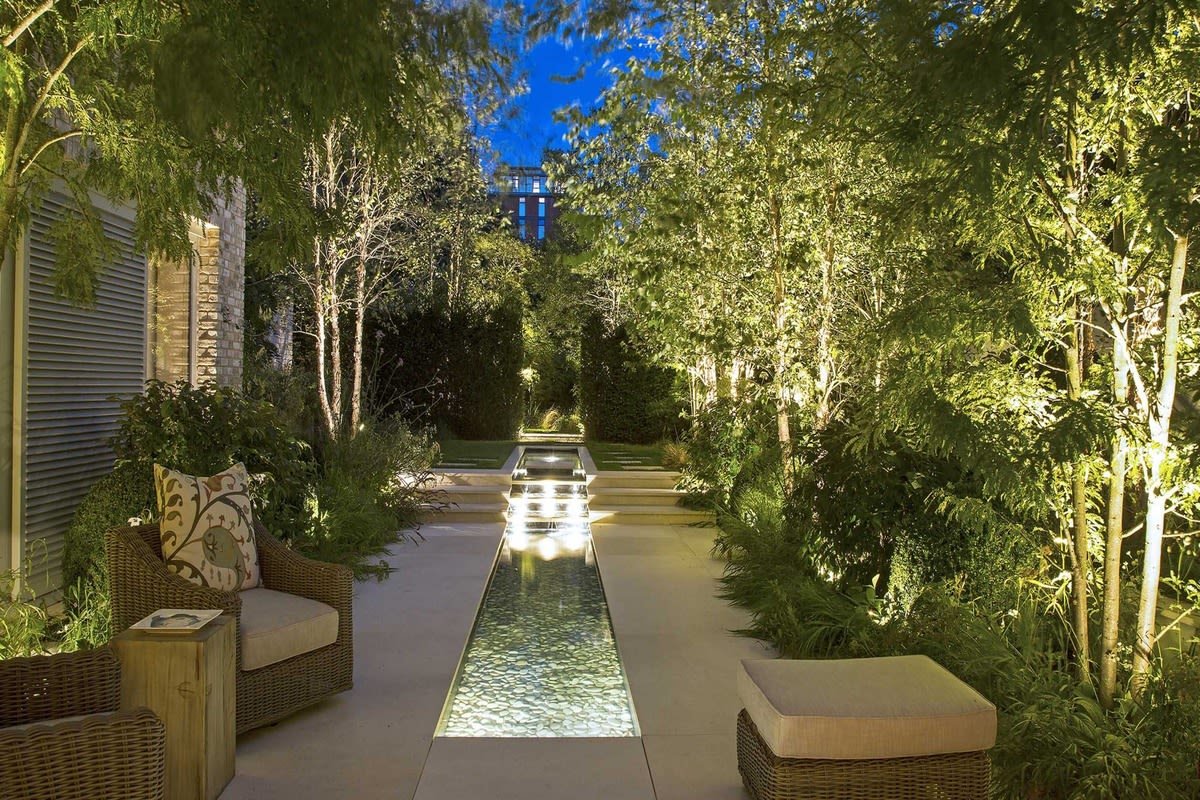
Garden Lighting Design Ideas for Premium Outdoor Spaces
A considered garden lighting design helps people find their way, use an outdoor seating area and appreciate planting after sunset. The goal is not to light every corner. A few well-placed layers can make a garden feel welcoming while limiting glare and unnecessary light.
For a home, hotel or commercial property in Dhaka, start with how people move through and use the outdoor space. Then choose fixtures and controls that suit the landscape, exposure to rain and the maintenance plan.
Start with the garden's purpose and layout
Mark the entrance, paths, steps, changes in level, seating, gates and any areas used for evening dining or events. Note existing trees, walls, planters and water features. This simple site plan helps distinguish lighting that supports movement from lighting used only to highlight a feature.
Think about views from both inside and outside. A fixture that looks attractive from the lawn can create glare through a window or shine toward a neighbour when viewed from the house. Testing a small number of lights after dark can reveal these issues before a full installation.
Five garden lighting design ideas
1. Guide paths with discreet, downward light
Use evenly considered, shielded fixtures to make a route and its steps easier to read. Place lights so their beams fall on the walking surface rather than directly into the eyes. Avoid lining a path with more fixtures than the route needs; a quieter layout often feels more refined.
2. Give one tree or planting feature a focal role
A mature tree, sculptural plant or attractive canopy can anchor a garden view. A carefully aimed accent light can reveal its form, while softer light on nearby foliage provides depth. Choose a beam and position for the actual plant and viewing angle, and keep the light off windows and neighbouring properties.
3. Make seating and dining areas comfortable
Combine gentle ambient light with more focused light where people read, prepare food or gather. Keep bright sources out of direct sightlines from chairs and tables. Separate controls for a dining terrace and a garden path make it easier to use only the lighting needed for an occasion.
4. Reveal a wall, screen or textured surface
Light directed along a boundary wall, timber screen or stone surface can bring out its texture and give a compact courtyard a sense of depth. A test at night is useful because small changes to the fixture angle can create a very different pattern and help avoid harsh hot spots.
5. Coordinate lights with a fountain or water feature
Water reflects light, so a restrained accent can make a fountain a focal point after dark. Position and shield fixtures to avoid distracting glare from the water surface. Keep pump access, maintenance routes and electrical equipment in the design rather than adding lights as an afterthought. For ideas on integrating the feature into a garden, see our guide to water fountain design.
Use layers and controls instead of lighting everything
It can help to think in three layers: low-level guidance for movement, useful light for activity areas, and selective accents for plants or architecture. Put areas that serve different purposes on separate controls. Timers, dimming or suitable sensors may help tailor operation, but select equipment that is compatible with the installed fixtures and the way the space is used.
Responsible outdoor lighting guidance recommends directing light where it is needed, using no more light than the task calls for and controlling when it is on. See Utah State University's outdoor lighting design resources and the U.S. Department of Energy's overview of light at night.
Choose fixtures for the real outdoor conditions
Garden lights in Bangladesh may be exposed to rain, humidity, heat, dust and regular cleaning. Select fixtures, connectors and wiring that are rated by their manufacturers for the actual installation environment. Consider access for replacing a lamp or driver, and avoid placing equipment where routine garden work can damage it.
Outdoor electrical connections and installation should be reviewed by a qualified electrician. Keep cables protected and arranged so they do not cross walkways, interfere with drainage or create a trip hazard. The correct product and installation details depend on the site and local requirements.
A practical planning sequence
- List the routes and outdoor activities that need light.
- Choose one or two landscape features to accent rather than highlighting every plant.
- Plan fixture positions, beam direction, controls and maintenance access on a site layout.
- Test sample fixtures after dark from the main seating and indoor viewing points.
- Have the final electrical layout and outdoor equipment checked by a qualified professional.
Plan garden lighting in Dhaka with Baganbari
Lighting works best when it is coordinated with paths, planting, seating and the wider landscape plan. Baganbari can help develop a site-specific concept for homes and commercial outdoor spaces. Explore our Garden Lighting service and Landscape Design service, or contact our team to discuss your garden.